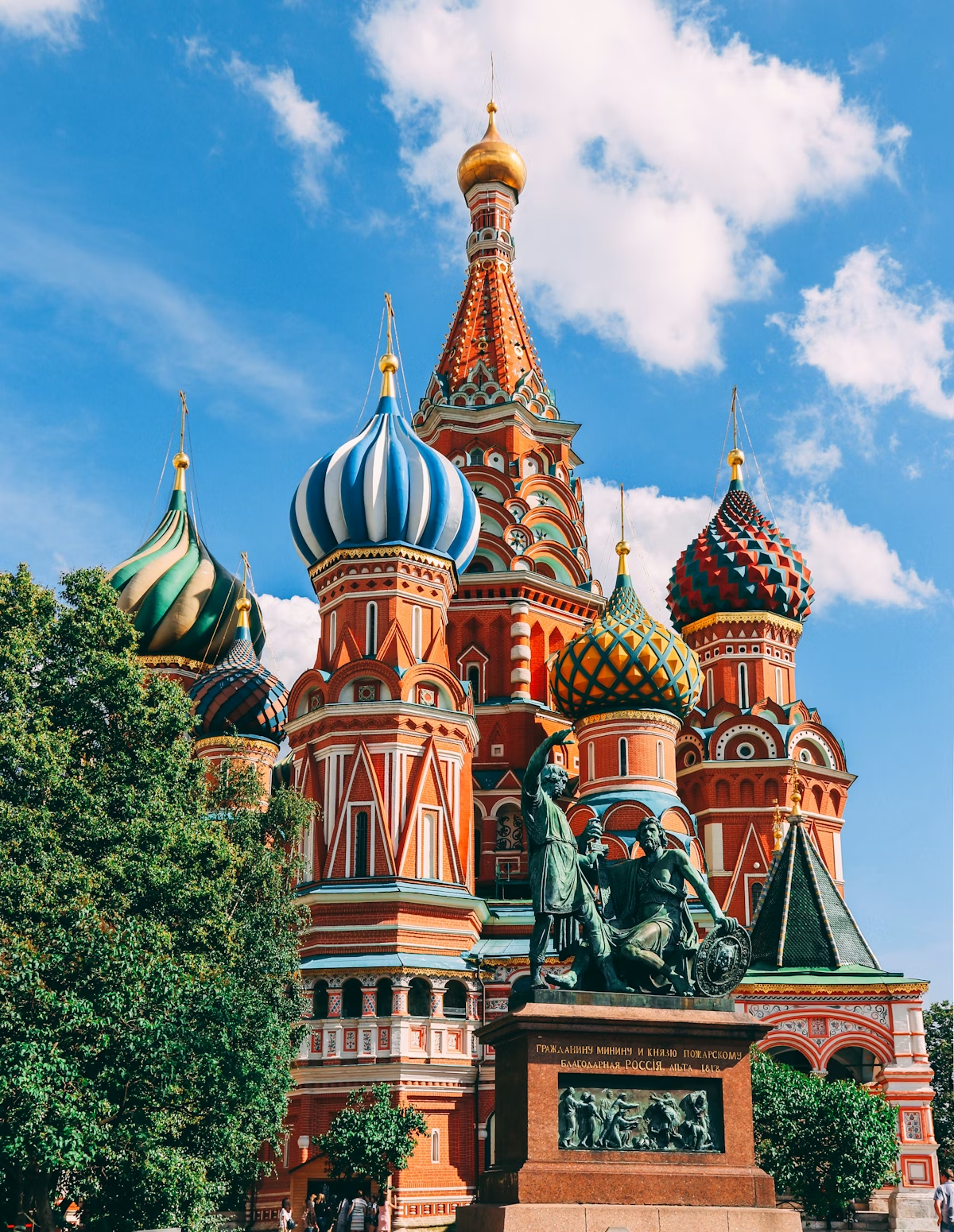
Russia is a vast transcontinental country stretching from the eastern plains of Europe to the eastern regions of Asia. With a total land area of 17,075,400 square kilometers, Russia is the largest country in the world.
The official language of the Russian Federation is Russian. However, Russia is one of the most culturally diverse countries globally. This diversity makes Russia a unique destination for international students, offering exposure to multiple cultures, traditions, and perspectives.
Russian higher education is internationally recognized for its strength in science, research, medicine, engineering, and technology.
Higher Education in Russia
Historically, education in Russia was fully funded by the government, including tuition and living expenses during the Soviet era. Today, Russia has hundreds of higher education institutions, including public and private universities. There are three main types of higher education institutions in Russia:
Universities
Offer a wide range of academic programs across various fields and levels of education.
Academies
Provide specialized education and conduct extensive research, often focusing on a single field such as medicine, science, or arts.
Institutes
Function as independent institutions or as specialized branches within larger universities and academies.
Russian Education System & Degree Structure
The Russian education system follows a structure similar to the Central European model and aligns with international standards via the Bologna Process. Higher education typically lasts between four and six years depending on the field of study.
General Education
Secondary education in Russia lasts eleven years. Education from year one to year nine is compulsory (Certificate of Basic General Education). Students may then continue for two additional years to obtain a Certificate of Complete Secondary Education (allowing university admission), or enroll in vocational colleges.
Bachelor's & Medical Degrees
The Bachelor degree (Bakalavr) is awarded after 4 years of full-time study, requiring state examinations and a research project. In medical programs, this first stage of education lasts 6 years.
Master's or Specialist Diploma
After earning a Bachelor degree, students may continue to a Master degree or Specialist Diploma program. These generally require two years of study, including research, practical training, thesis preparation, and final examinations.
Candidate & Doctor of Sciences
A Master degree qualifies graduates for postgraduate research. The first stage leads to the Candidate of Sciences (equivalent to a Ph.D.). Further advanced study leads to the Doctor of Sciences, the highest academic qualification in Russia.